Skip to content
New Study Finds Oral Sodium Butyrate Associated With Lower LPS Across Multiple Organs
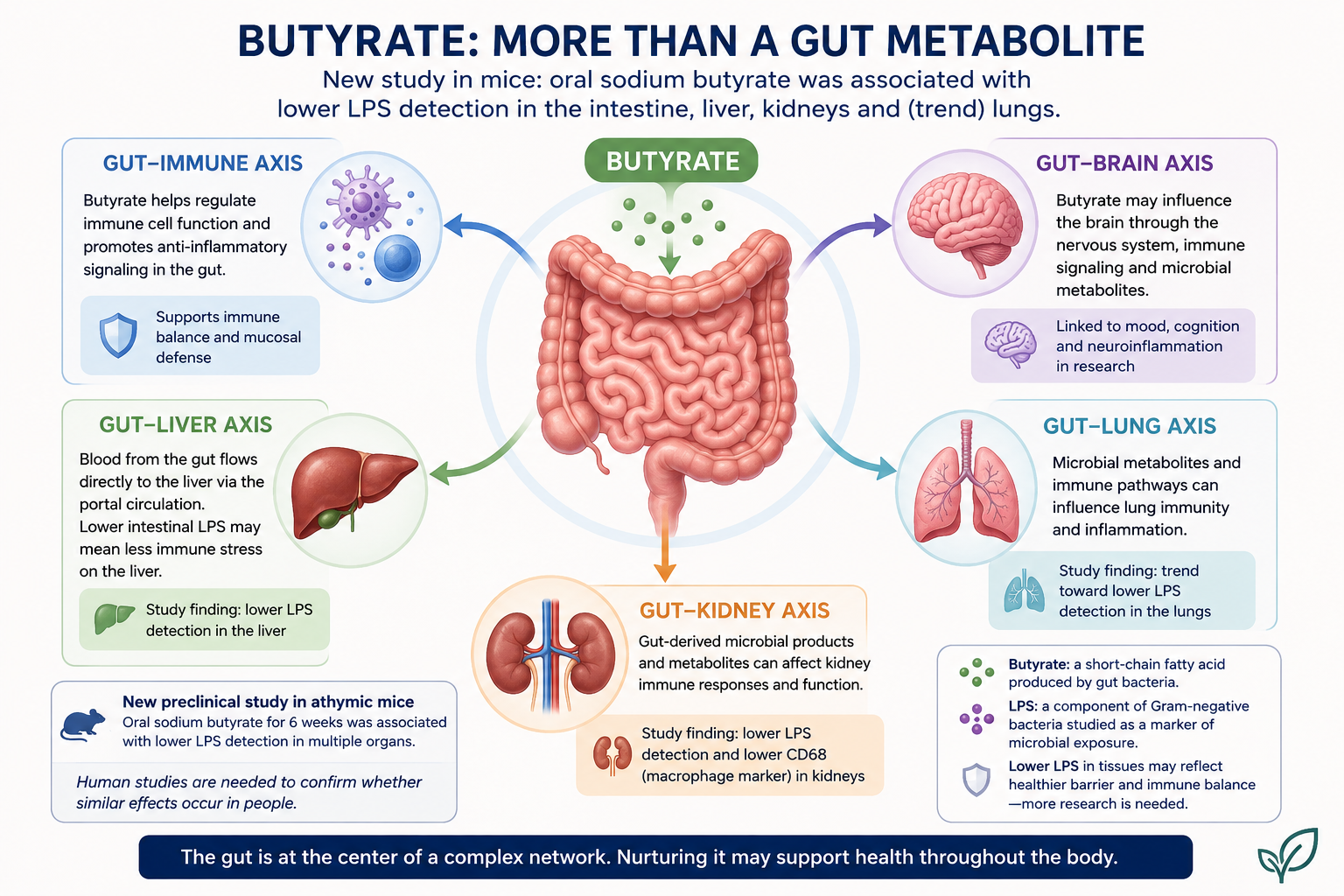
Butyrate is usually discussed as a gut metabolite. But growing research suggests its influence may extend far beyond the intestine.
A new study published in Nutrients in August 2026 found that mice receiving oral sodium butyrate for six weeks had significantly lower detection of lipopolysaccharide (LPS) in the small intestine, liver and kidneys, with a similar but less definitive trend in the lungs.
The findings add to growing scientific interest in the connections between the gut and other systems throughout the body.
What Is LPS?
LPS is a structural component of Gram-negative bacteria.
The gastrointestinal tract naturally contains enormous populations of bacteria. The intestinal barrier—including epithelial cells, tight junctions and mucus—helps regulate interactions between this microbial environment and the rest of the body.
Butyrate is particularly interesting because it is associated with several aspects of intestinal barrier biology and immune signaling.
The new study investigated whether providing sodium butyrate would also be associated with differences in bacterial antigen detection outside the intestine.
What Did the Researchers Find?
The study involved 15 athymic mice, a model with impaired adaptive immunity. Ten received normal drinking water and five received water containing sodium butyrate for six weeks.
Researchers then examined the intestine, liver, lungs and kidneys.
They found:
- Significantly lower LPS detection in the small intestine
- Significantly lower LPS detection in the liver
- Significantly lower LPS detection in the kidneys
- Lower kidney expression of CD68, a marker associated with macrophages
- A similar trend toward lower bacterial antigen detection in the lungs
Overall tissue structure remained largely preserved, with no obvious evidence of organ toxicity.
The Gut Is Connected to Much More Than Digestion
These findings are particularly interesting because modern microbiome research increasingly views the gut as part of a network of interconnected biological systems.
Gut–Immune Axis
Butyrate interacts with intestinal and immune cells through several mechanisms, including cell-surface receptors and inhibition of histone deacetylases (HDACs).
These interactions have made the gut–immune axis one of the most extensively studied areas of butyrate research.
In this study, sodium butyrate was associated with differences in both bacterial antigen detection and certain innate immune markers.
Gut–Liver Axis
Blood leaving much of the gastrointestinal tract travels through the portal circulation directly to the liver.
This creates an intimate connection between the intestinal environment and liver biology.
The researchers found significantly lower LPS detection in both the intestine and liver of mice receiving sodium butyrate—an intriguing finding in the context of the gut–liver axis.
Gut–Kidney Axis
Researchers are also investigating how gut-derived microbial products and metabolites may influence kidney biology.
In this study, sodium-butyrate-treated mice had significantly lower kidney LPS detection as well as lower expression of the macrophage-associated marker CD68.
Gut–Lung Axis
The gut and lungs may seem distant, but increasing research suggests that microbial metabolites and immune signaling can connect them.
The lung findings in this study were less definitive, but researchers observed a trend toward lower bacterial antigen detection in animals receiving sodium butyrate.
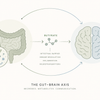
Gut–Brain Axis
The gut–brain axis is another major area of butyrate research.
Communication between the gut and brain involves microbial metabolites, immune signaling, the nervous system and other pathways. Butyrate is increasingly being studied as one of the microbial metabolites potentially involved in this communication.
Importantly, the new study did not examine the brain, so it provides no direct evidence about the gut–brain axis. It does, however, fit into the broader scientific picture of butyrate as a metabolite whose biological influence may extend beyond the gastrointestinal tract.
An Important Limitation
This study does not prove that sodium butyrate repaired the intestinal barrier or prevented LPS from entering circulation.
The researchers did not directly measure intestinal permeability, circulating LPS, tight-junction proteins or inflammatory cytokines.
It was also a small exploratory animal study involving only 15 mice.
The appropriate conclusion is therefore quite specific:
Oral sodium butyrate was associated with lower tissue detection of LPS in multiple organs in this mouse model.
Human studies are needed to determine whether similar effects occur in people.
The Bigger Picture
The significance of butyrate may extend well beyond its traditional description as a fuel source for cells lining the colon.
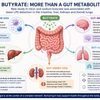
Research is increasingly examining butyrate in relation to interconnected systems including the:
Gut–immune axis • Gut–liver axis • Gut–kidney axis • Gut–lung axis • Gut–brain axis
This new study adds an intriguing piece to that larger picture by finding lower bacterial antigen detection in several organs following oral sodium butyrate supplementation.
It reinforces a concept increasingly central to microbiome research:
What happens in the gut may not stay in the gut.
Study Reference
Mossa AH, Alhalabi WSM, Chehade S, Alnakhli ROO, Hachim IY, Hachim MY. Oral Sodium Butyrate Is Associated with Altered Tissue Bacterial Antigens and Innate Immune Marker Expression Across Different Organs in Athymic Mice. Nutrients. 2026;18(16):2604.
Scientific & Regulatory Disclaimer
This article is for educational and informational purposes only and discusses preclinical research conducted in mice. These findings should not be interpreted as demonstrating equivalent effects in humans. Dietary supplements are not intended to diagnose, treat, cure or prevent any disease.