Skip to content
Butyrate, Autism and the Gut Microbiome: What Does the Research Show?
Scientists are discovering that the trillions of microorganisms living in our digestive system do much more than help digest food.
The gut microbiome produces substances that interact with our intestinal lining, immune system and potentially even the brain. One area attracting increasing scientific interest is the relationship between the microbiome and autism spectrum disorder (ASD).
One microbial substance in particular has caught researchers' attention: butyrate.
But what does the research actually show? And could butyrate help explain some of the connections scientists are observing between the gut and brain?
The answer is intriguing—but far from settled.
What Is Butyrate?
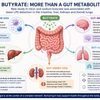
Butyrate is a short-chain fatty acid (SCFA) naturally produced in the colon when certain gut bacteria ferment dietary fiber.
It plays several important roles in normal physiology. In particular, butyrate is an important energy source for the cells lining the colon and participates in maintaining the intestinal barrier.
But its effects don't necessarily stop in the gut.
Researchers are studying how butyrate may influence immune signaling, inflammation, gene activity and communication along the gut-brain axis.
This has made butyrate an increasingly interesting subject in microbiome research.
What Does Butyrate Have to Do With Autism?
Numerous studies have found differences between the gut microbiomes of people with autism and neurotypical individuals.
Researchers have also reported differences in the bacterial pathways responsible for producing short-chain fatty acids such as butyrate.
However, this does not mean that autism is caused by a lack of butyrate—or that taking butyrate treats autism.
The relationship is considerably more complicated.
A 2026 systematic review examining short-chain fatty acids, neuroinflammation and autism evaluated 20 studies. The researchers reported that butyrate showed relatively consistent anti-inflammatory and neuroprotective effects across the evidence they reviewed, while emphasizing that human clinical evidence remains limited and heterogeneous.
Another recent meta-analysis examined butyrate measurements across 16 studies involving 473 people with ASD and 514 controls.
Overall, the researchers found no significant difference in butyrate between the two groups.
But there was an intriguing detail.
When researchers looked specifically at plasma rather than fecal samples, circulating butyrate was significantly lower among participants with ASD.
That doesn't establish cause and effect, but it raises an interesting question:
Could the amount of butyrate available to the body matter as much as the amount being produced in the gut?
Scientists don't yet know.
How Could the Gut Affect the Brain?
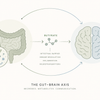
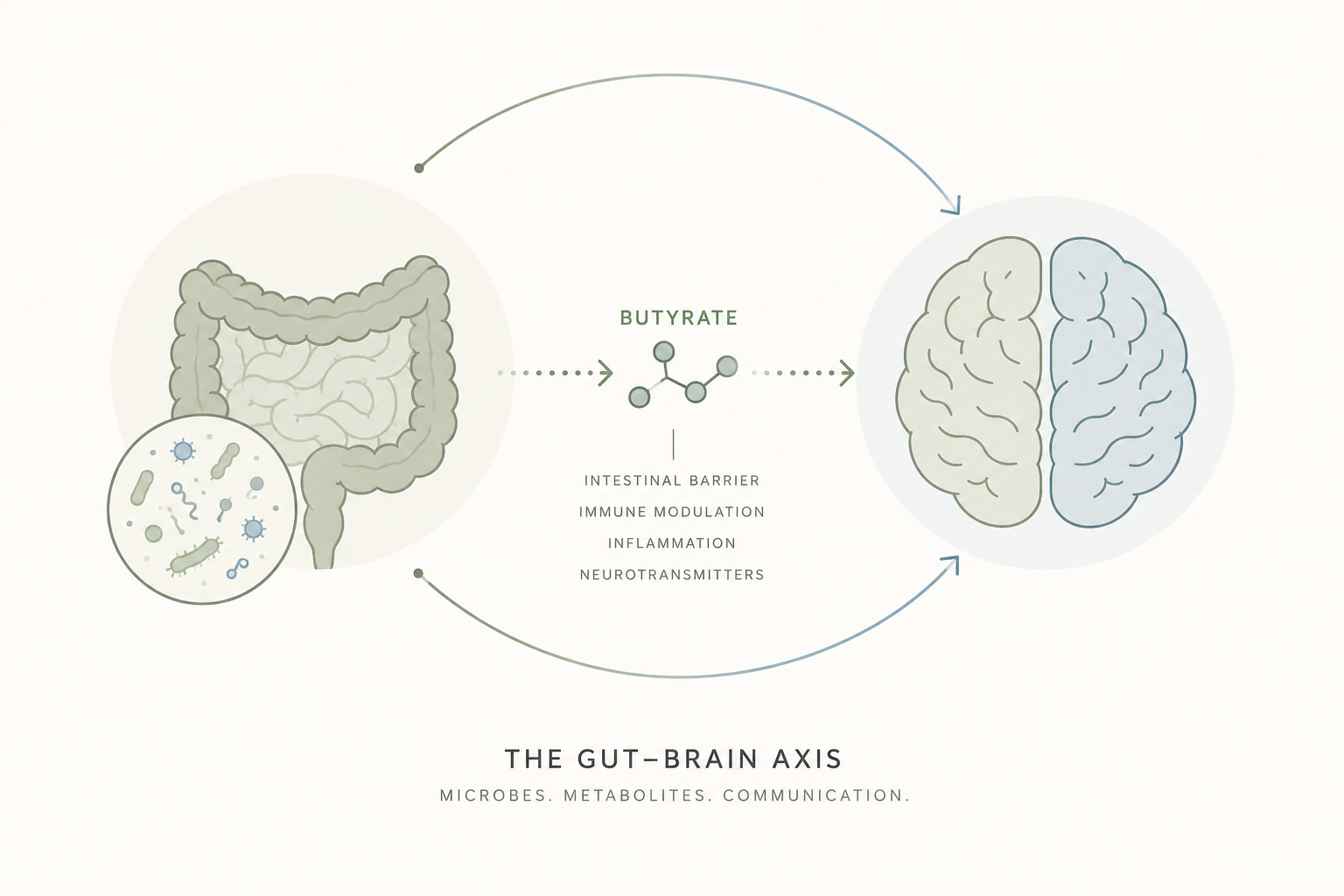
Researchers often describe communication between the digestive system and nervous system as the gut-brain axis.
Rather than being one pathway, it is a network of communication involving the immune system, hormones, microbial metabolites, the intestinal barrier and nerves such as the vagus nerve.
Butyrate is interesting because it potentially interacts with several parts of this system.
One proposed pathway looks something like this:
Gut bacteria → butyrate production → intestinal barrier and immune signaling → systemic signals → gut-brain communication
Butyrate can also influence gene activity by inhibiting enzymes known as histone deacetylases (HDACs).
These mechanisms provide scientifically plausible ways in which changes in microbial metabolism could potentially have effects beyond the digestive system.
But biological plausibility is not the same thing as demonstrating a clinical benefit.
An Interesting Clue From a Small Human Study
A small study published in Nutrients followed children with ASD who consumed a modified ketogenic diet.
Researchers observed changes in the gut microbiome, increased expression of butyrate kinase—an enzyme involved in microbial butyrate production—and reductions in certain inflammatory markers.
The researchers also identified changes in microRNAs associated with brain-derived neurotrophic factor (BDNF) signaling.
The study was very small, so it cannot establish that butyrate produced the reported behavioral changes.
Nevertheless, it provides another interesting piece of evidence connecting microbiome metabolism, butyrate-related pathways, inflammation and brain signaling.
Something Our Customers Have Made Us Curious About
Our own interest in this research has also been influenced by something unexpected.
Over the years, a small number of customers have independently contacted us and described positive experiences with sodium butyrate involving themselves or family members who are on the autism spectrum.
One adult customer summarized her experience in a remarkably simple way:
“Butyrate helps me cope.”
We've remembered that comment because of its simplicity.
But it is equally important to be clear about what these experiences do not tell us.
Customer reports are anecdotes, not scientific evidence.
They cannot establish that butyrate caused an improvement. They don't control for diet, medications, other supplements, expectations, changes over time or countless other variables.
And an experience reported by one individual cannot predict what another person will experience.
What unexpected observations can do, however, is generate questions worth investigating.
In this case, scientists are beginning to ask remarkably similar questions.
Sodium Butyrate Is Now Being Studied Directly
Perhaps the most interesting development is a clinical trial known as b(AUT)yrate.
This multicenter randomized controlled trial is studying sodium butyrate supplementation in children with autism spectrum disorder and functional gastrointestinal disorders.
Unlike observational microbiome studies, a randomized placebo-controlled trial can begin answering a much more useful question:
Does giving sodium butyrate actually produce measurable effects?
That distinction is crucial.
Finding different bacteria or metabolites in people with autism establishes an association. It doesn't tell us whether those differences contribute to symptoms, result from autism-associated differences in diet and physiology, or are simply correlated with something else entirely.
Controlled intervention trials can begin separating those possibilities.
Cause, Effect—or Both?
This remains one of the biggest unanswered questions in microbiome research.
Children and adults with autism can have different diets, food preferences, gastrointestinal symptoms, medication use and lifestyle patterns—all of which can alter the microbiome.
That means researchers face a difficult problem:
Does an altered microbiome contribute to physiological differences associated with autism, or does autism contribute to an altered microbiome?
Both may ultimately be true.
There is another important consideration: autism encompasses an extraordinarily diverse group of individuals.
Even if researchers eventually identify a meaningful relationship involving butyrate, that wouldn't necessarily mean every autistic person has the same microbiome characteristics—or would respond to an intervention in the same way.
Why This Research Matters
For many years, gut bacteria were viewed mainly in terms of digestion.
We now know that these microorganisms manufacture an extraordinary range of biologically active compounds.
Butyrate provides a fascinating example:
Dietary fiber → bacterial fermentation → butyrate → interaction with intestinal and cellular signaling
Understanding what happens after that final step is becoming an important area of research.
For us at LongJuvity, hearing unexpected customer experiences naturally makes us curious about the underlying science. But curiosity isn't the same thing as a conclusion.
The evidence today does not establish sodium butyrate as a treatment for autism.
What it does provide is an increasingly interesting scientific reason to investigate the relationship between butyrate, the microbiome, immune signaling and the gut-brain axis.
With controlled trials of sodium butyrate now underway, we may soon know considerably more.
Sometimes an unexpected observation leads to a scientific question.
The important part is allowing good research—not anecdotes—to provide the answer.
References & Further Reading
- Bouelkhair M, Kacimi FE, Azzaoui FZ, et al. Short-chain fatty acids, neuroinflammation, and autism spectrum disorders: A mechanistic systematic review. Journal of Neuroimmunology. 2026;416:578914. DOI: 10.1016/j.jneuroim.2026.578914.
- Autism and the gut metabolome: Evidence for altered short-chain fatty acid profiles from a systematic review and meta-analysis. 2026. Meta-analysis examining short-chain fatty acids across studies of individuals with ASD and controls, including subgroup analysis of fecal and plasma butyrate.
- Mu C, et al. Ketogenic Diet Induced Shifts in the Gut Microbiome Associate with Changes to Inflammatory Cytokines and Brain-Related miRNAs in Children with Autism Spectrum Disorder. Nutrients. 2024;16(10):1401. DOI: 10.3390/nu16101401.
- ClinicalTrials.gov. Butyrate Supplementation in Children With Autism Spectrum Disorder (ASD) and Functional Gastrointestinal Disorders — b(AUT)yrate. ClinicalTrials.gov Identifier: NCT06514573. Sponsored by Istituto Superiore di Sanità.
- FDA. Structure/Function Claims for Dietary Supplements and Conventional Foods. U.S. Food and Drug Administration. For information concerning the distinction between structure/function and disease claims for dietary supplements.
Important Note
This article discusses emerging scientific research for educational purposes. Research into the gut microbiome, butyrate and autism remains preliminary, and the findings discussed here do not establish sodium butyrate as a treatment for autism spectrum disorder.
Individual customer experiences described in this article are anecdotal and should not be interpreted as evidence of efficacy.